Need water damage restoration in Albany?
- Request an estimate in minutes
- No obligation to hire
- Independent local providers
- Plans that fit your week
No obligation
Request an estimate today
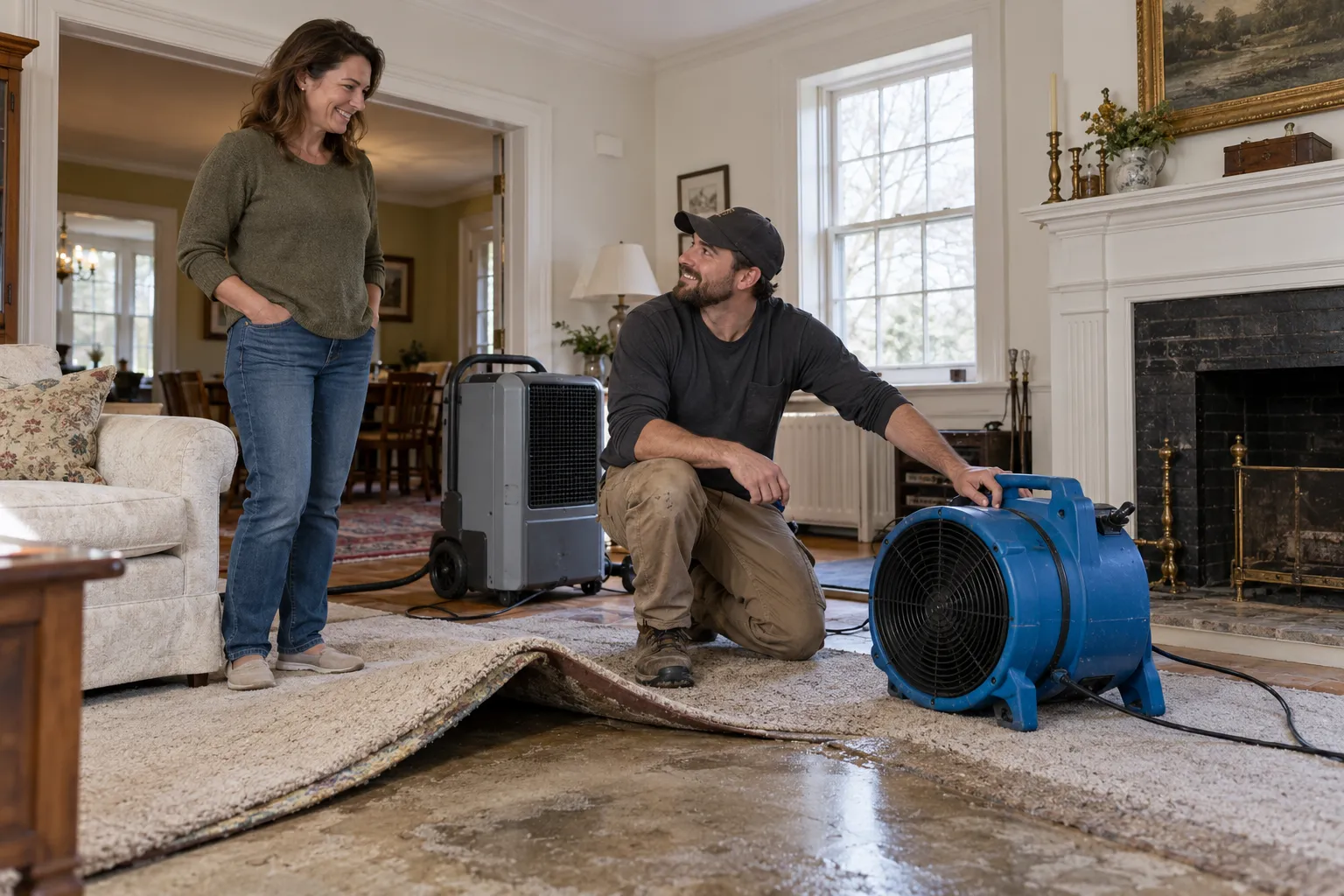
Water in your home is stressful. It can come from a burst pipe, a failed appliance, a roof leak or a storm. Whatever the cause, the goal is the same: get the water out, dry the structure and repair what is damaged.
Yardspersonal Restoration is a referral service. We do not do the work. We connect homeowners across the Capital Region with independent local providers who do. Doing the job right protects your house and its value. It also keeps the disruption to your family as small as it can be. Request an estimate, compare your options and get a written quote before work starts.
Take a breath. Then work through this short list.
Next, ask for help. A local provider in our network can check the damage and explain the plan. Dry it right, and the house stays sound.
Water spreads fast. It soaks into drywall, floor boards, insulation and carpet pad. Wood starts to swell. Metal starts to rust. Mold can begin to grow within a couple of days in damp, warm air.
Many providers can respond quickly, but availability varies. Request a callback to check provider availability in your area.
Acting early protects more than one room. Hidden moisture can rot framing and ruin finishes. A buyer's inspector may find it years later. Early action protects your home's value.
A provider starts with a look. They find where the water came from and how far it went. They use a moisture meter, a tool that reads how wet a surface is. Some also use a thermal camera to spot damp areas behind walls.
Then they make a plan. You should get the scope of work, the steps and a written quote. Ask questions. A good plan makes sense to a busy homeowner.
Water extraction means pulling standing water out of the house. Pumps and strong vacuums do this job. It comes before everything else. Less water means less drying time.
Structural drying means drying the bones of the house: floors, wall cavities, ceilings and framing. Providers set up air movers, which are strong fans. They add dehumidifiers, which are machines that pull moisture from the air. They check the readings each day. They stop when the materials reach a normal dry level, not before.
This step matters most for resale. A surface can look dry and still hold water inside.
After drying, the provider cleans and sanitizes the affected areas. Items that cannot be saved get removed. That can mean soaked carpet pad or swollen drywall. Then come the repairs: new drywall, paint, flooring and trim. Some providers do the repairs. Others hand off to a builder. Ask who does what.
Not all water is the same. Providers sort it into three groups.
Clean water can turn gray after a day or two. That is another reason to move early. The type of water decides what can be saved and what must be thrown out.
Winter brings its own risks. Pipes can burst when a hard cold snap hits. Ice dams, which are ridges of ice on the roof edge, can push melt water under shingles. Spring snowmelt and coastal storms can send water toward your foundation.
Older homes add more risk. Stone and block foundations can let water seep in. Multi-family buildings may have leaks that start in a neighbor's unit. Cape Cod style homes have tight attic spaces where leaks can hide. A provider who knows local homes knows where to look.
Some policies may cover sudden damage, like a burst pipe. Many do not cover slow leaks or flood water. Check your policy and ask your agent.
Providers can often help document damage for a claim. Keep your photos, your receipts and your written quote. Ask the provider for a list of the work done and the drying readings. Your insurer makes the final decision on a claim.
Providers in our network are independent businesses. Yardspersonal Restoration does not do the work and does not set prices. Before you say yes, ask these questions.
A clear answer is a good sign. A vague answer is a reason to ask another provider.
Water work can be noisy. Fans may run for several days. Tell the provider about school runs, work hours, pets and naps. Ask which rooms you can still use. Ask for a daily visit time so you can plan. Ask them to keep cords and equipment out of walkways.
Small details like these make a big job easier to live with.
When the readings show dry, the equipment goes. Then the repairs start. Keep your records: drying readings, receipts and final paperwork. A future buyer may ask about past water problems. Good records show the job was done right.
Protect the house, and plan around life. Then the home is ready for what comes next.
Pumps and strong vacuums pull standing water out of your home so drying can start sooner.
Fans and dehumidifiers dry floors, walls and framing. Daily readings show when they are dry.
Providers clean wet surfaces and treat them. They remove items that cannot be saved safely.
Drywall, paint, flooring and trim are repaired so the rooms look right and hold their value.
Costs vary a lot by job. Size, water type, materials and local rates all matter. These are typical U.S. ranges only. Always get a written quote before work starts.
| Item | Typical range | Notes |
|---|---|---|
| Water extraction | $500 – $2,500 | Depends on depth and area |
| Structural drying | $1,000 – $4,000 | Based on equipment and days |
| Cleaning and sanitizing | $500 – $3,000 | Higher for gray or black water |
| Drywall and insulation removal | $1,000 – $5,000 | Based on wall area affected |
| Flooring repair or replacement | $1,500 – $8,000 | Depends on material type |
| Full repair and rebuild | $3,000 – $20,000+ | Large losses cost more |
Stop the water source, stay clear of power hazards and take photos of the damage.
Tell us about the damage. A local provider reviews it and explains the plan.
The provider removes standing water, then dries the structure and checks daily readings.
Affected areas get cleaned, then repaired so your home looks and works right.
Proper drying stops hidden rot and mold, so the house stays sound and holds its resale value.
Providers explain the steps and give a written quote before the work begins.
Ask providers to plan visits around work, school and family routines to keep disruption low.
Local providers know older homes, stone foundations and cold-weather damage in your area.
Tell us what happened and request an estimate. A local provider in our network can follow up with next steps. You can also email contact@yardspersonal.living.
No obligation