Need flooded basement cleanup in Albany?
- Request an estimate in minutes
- No obligation to hire
- Independent local providers
- Plans that fit your week
No obligation
Request an estimate today
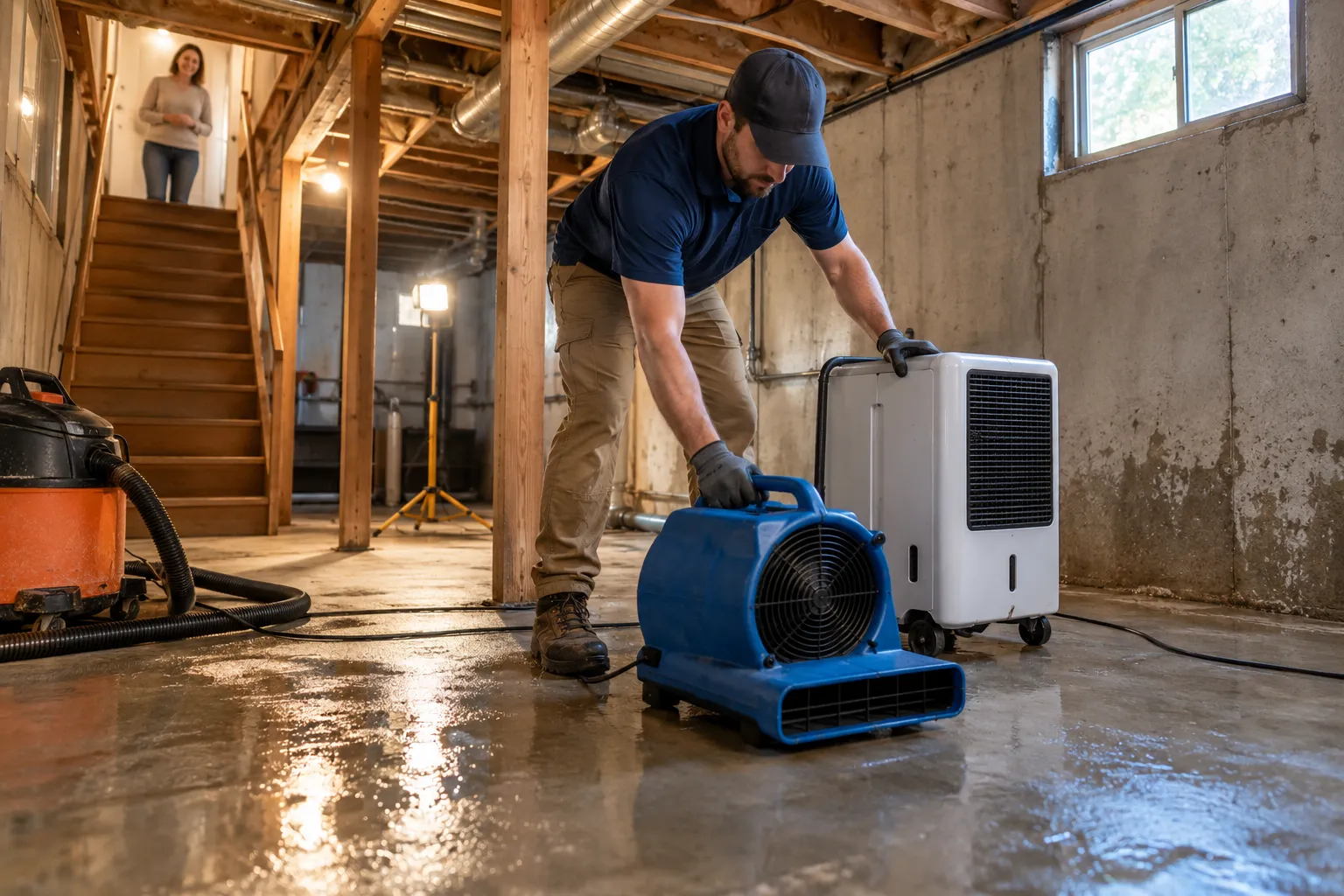
A flooded basement is stressful, but it can be fixed. Local providers in our network pump out the water, dry the walls and floor, and clean what is left. The goal is simple: dry it right, so the house stays sound.
Yardspersonal Restoration is a referral service. We do not do the work. We connect homeowners in the Capital Region with independent providers who do. Request an estimate and describe what happened. A provider can then explain the steps, the timing and the price in writing. Plan around life. Tell them about your kids, your work hours and your schedule.
Take a breath. A flooded basement is a big job, but it is a fixable one. Do things in this order: stay safe, stop the source, then line up a provider.
Water and power are a bad mix. If water touches outlets, cords or the electric panel, stay out of the room. Ask your utility or a licensed electrician to cut the power. Do not wade into water you cannot see through. If you smell gas, leave the house and report it.
Clean water from a broken supply line is one thing. Storm water and sewage are another. They carry germs. If you must go in, wear boots, gloves and a mask. Keep kids and pets upstairs.
Providers need to know the source. It changes the plan. Stopping the source also keeps the water from coming right back.
Check the water heater, the washer hose and any supply lines. If you find a leak, shut off the water at the main valve.
Spring snowmelt and coastal storms push water against the foundation. Older stone and block walls let it seep through the joints. Frozen ground cannot soak up the melt, so the water heads for your wall.
A sump pump is the small pump in the floor pit that sends water outside. If it quits or the power goes out, the pit can overflow. Sewer backup is a health risk. Tell the provider right away if you think that is the cause.
Water soaks into drywall, carpet and wood framing. Wet materials can grow mold in a day or two. Wood swells. Metal rusts. Smells set in. The longer water sits, the more you may have to tear out. Emergency water damage repair starts with speed, and many providers can respond quickly. Request a callback to check provider availability.
Every job is different. Most follow the same path.
Pumps and wet vacuums pull out the standing water. This step is called water extraction. It comes first, because water left behind slows everything else.
Structural drying means drying the bones of the house: framing, subfloor, concrete and block. Providers set up fans and dehumidifiers. They use meters to check moisture and track the numbers until the materials are dry.
Hard surfaces get washed. After storm water or sewage, they also get disinfected. Air scrubbers may help with dust and odor.
Soaked drywall, insulation and carpet pad often have to go. Good providers remove only what cannot dry. They also look for early signs of mold.
A bare concrete basement usually dries faster. A finished one hides water behind walls and under flooring. Providers may drill small holes or lift baseboards to reach trapped moisture. Expect more tear-out and a longer drying time in a finished space.
Busy household? Say so at the start. Ask about visit windows, fan noise and where the equipment will sit. Ask if you can keep using the laundry or the furnace. A clear schedule keeps disruption low. Plan around life.
Move what you can to dry ground upstairs. Take photos of everything before you move it. Metal and hard plastic often clean up well. Paper, cardboard and fabric soaked by dirty water are usually lost. Ask the provider if they offer contents cleaning, and keep a list of what you toss.
Dry it right, then rebuild. Ask for the final moisture readings in writing. Drywall, paint and flooring should wait until the space is dry. Then fix the cause: gutters, grading, cracks or the sump pump. This helps protect the house and its resale value. Some policies may cover sudden damage, so check your policy. Providers can often help document damage for a claim.
A short list keeps the first talk clear.
Pumps and wet vacuums remove standing water from the floor, sump pit and low corners.
Fans and dehumidifiers dry framing, subfloor and block, with moisture readings to show progress.
Floors, walls and hard surfaces get cleaned and disinfected, especially after storm water or sewage.
Soaked drywall, padding and insulation come out so the rest of the space can dry.
Prices depend on water depth, water type, basement size and how long water sat. These are typical U.S. ranges only. Always get a written quote before work begins.
| Item | Typical range | Notes |
|---|---|---|
| Water extraction | $300 – $1,500 | Depends on depth and square footage |
| Structural drying | $1,000 – $4,000 | Equipment days and number of rooms |
| Cleaning and sanitizing | $500 – $2,500 | Higher for storm water or sewage |
| Drywall and insulation tear-out | $1,000 – $4,000 | Rises if the basement is finished |
| Sewage cleanup | $1,500 – $7,000 | Extra safety steps and disposal |
| Mold testing | $300 – $1,000 | Only needed if mold is suspected |
Keep out of standing water near power. Shut off the water source if you can.
Request an estimate and tell us the source, the water depth and any damage.
The provider checks the space, explains the plan and gives a written quote.
Water comes out, the structure dries, and repairs begin once readings look good.
Proper drying keeps rot, rust and mold from eating away at the home over time.
A well-documented, fully dried basement is easier to explain to future buyers.
Providers can plan visits around school runs, work hours and daily routines.
Ask for scope, price and timing in writing, so there are no surprises later.
Tell us what happened and request an estimate. A local provider in our network can follow up with next steps. You can also email contact@yardspersonal.living.
No obligation